
Why Customers No Longer Answer Unknown Numbers
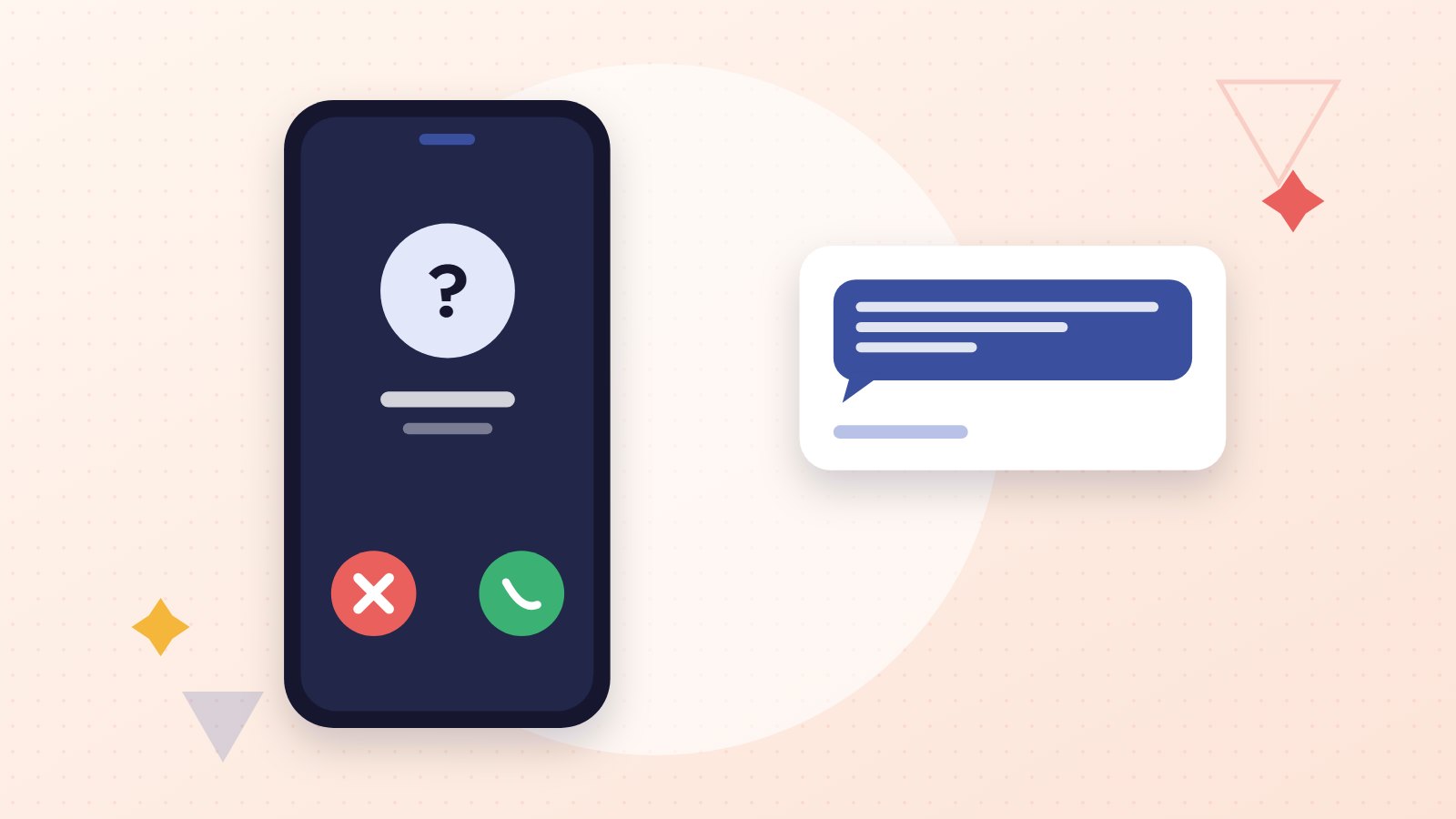
There was a time when a ringing phone created urgency. Today, for many people, it creates suspicion.
If the number is not saved in their contacts, the default response is increasingly simple: ignore it, let it go to voicemail, or wait for a message. The phone still rings, technically. The customer just does not believe the ring deserves their attention.
This is not a small behavioural shift. It is a structural change in how people manage interruption, privacy and trust. For marketers, sales teams and customer-service operations, it means the old assumption — “we’ll just call them” — is becoming a rather expensive little fantasy.
The unknown number has become a warning label
Consumers are not ignoring calls because they have suddenly become impossible to reach. They are ignoring calls because the voice channel has been polluted.
Spam, scam calls, robocalls, spoofed numbers and spoofed caller IDs have trained people to distrust the one thing that used to make a phone call powerful: immediacy. An unknown number no longer feels neutral. It feels like a small risk assessment taking place on a lock screen.
The problem is especially sharp because legitimate businesses often look identical to bad actors at the moment of contact. A bank, insurer, recruiter, delivery company or healthcare provider may be calling for a valid reason, but to the customer the call still appears as a number they do not recognise.
When customers cannot tell the difference, silence wins.
Smartphones have made avoidance effortless
The behaviour is also being reinforced by the phone itself.
Modern smartphones increasingly give users options to screen, silence or filter calls from numbers that are not in their contacts. Call-screening features can ask unknown callers to identify themselves before the recipient decides whether to answer. Other settings can send unsaved numbers straight to voicemail.
That is good for consumers. Nobody sensible wants their day hijacked by scam calls. But it creates a very real challenge for legitimate businesses. Avoiding unknown callers is no longer a personal hack. It is becoming a default phone behaviour.
Why this matters for performance marketing
For performance marketers, this shift affects the entire funnel.
Lead generation does not end when a person submits a form, replies to a message or clicks through to a landing page. The real commercial value often depends on what happens next: qualification, fulfilment, advice, confirmation, onboarding or sale. In many industries, that still involves a phone call.
But if the customer no longer answers unknown numbers, then “speed to lead” alone is not enough. Calling quickly is useful only if the person has a reason to trust the call when it arrives.
This changes how marketers should think about contactability. A lead is not truly contactable simply because the phone number is valid. A number can be deliverable, recently active and correctly formatted — and still be practically unreachable if the recipient has no context for the call.
Clean data gets the call to the device. Trust gets the person to respond.
The mistake: treating distrust as a volume problem
The common reaction is to call more.
More attempts. More agents. More number rotation. More urgency in the script. More chasing.
This can make the problem worse. Repeated calls from unfamiliar numbers may look even more suspicious to the recipient and can train customers to avoid the brand entirely. It can also distort performance reporting: teams may blame lead quality, agent quality or timing, when the real problem is that the customer never believed the call was safe to answer.
The better approach is not louder calling. It is better sequencing.
The call should not be the first moment of context
If a call is important, prepare the customer for it.
A simple SMS or email before the call can change the way the recipient interprets the unknown number. The message should be specific, brief and useful:
- who will be calling;
- why they are calling;
- when the call is likely to happen;
- what number or caller name to expect, if possible;
- how the customer can reschedule or opt out.
The point is not to write a novel. The point is to remove uncertainty. A customer who has just received a clear message saying, “An adviser will call you shortly about your quote,” is in a different psychological state from someone seeing a random number appear with no warning.
Context turns interruption into continuity.
Identity is becoming part of deliverability
Marketers are used to thinking about deliverability in email and SMS: sender reputation, valid addresses, consent, bounce rates, spam filtering and suppression rules.
Voice now needs the same discipline.
Businesses should use consistent outbound numbers, avoid unnecessary number rotation, monitor whether numbers are being flagged as spam, and make it easy for customers to recognise who is contacting them. Where branded or authenticated calling is available, it should be treated as part of the contact strategy rather than a technical afterthought.
Anonymous outbound calling is becoming less effective. Recognisable calling is becoming a competitive advantage.
Give customers more ways to raise their hand
A phone call is still valuable, especially for complex, high-value or urgent decisions. But it should not be the only route forward.
Campaigns should increasingly let customers choose the next step:
- reply to request a call;
- click to choose a time slot;
- confirm interest by SMS;
- continue on a landing page;
- request email, WhatsApp or call-back contact where appropriate;
- save a number before the call happens.
This gives the customer agency. It also creates a stronger signal of intent. Someone who actively requests a call is more likely to answer it than someone who is simply dropped into a dialler queue because they clicked something three minutes ago while making tea.
Voicemail still matters — if it is useful
Many people now use voicemail as a screening tool. That makes voicemail part of the conversion path, not an afterthought.
A good voicemail should be clear, calm and specific. It should state who is calling, why the call matters, and what the customer can do next. It should not sound like a script designed to create artificial urgency. “Please call us back as soon as possible” is not a strategy; it is a small cry for help dressed as a process.
The same applies to follow-up messages. If a customer misses a call, the next SMS should connect the dots: “We tried calling about your quote. You can reply CALL to request another call, or use this link to choose a time.”
Again, context beats pressure.
Measure contactability, not just leads
The organisations that adapt fastest will be the ones that measure the full contact journey.
Useful metrics include:
- answer rate by lead source;
- answer rate by time of day;
- answer rate after pre-call SMS versus no pre-call SMS;
- missed-call recovery rate;
- voicemail-to-callback rate;
- SMS reply rate after missed calls;
- conversion rate by contact sequence;
- opt-out and complaint rates;
- number-level spam flagging.
This moves the conversation beyond “How many leads did we generate?” to “How many leads could we actually reach, and through which sequence?”
That is where performance improves.
Trust now has to arrive before the call
The phone call is not dead. That claim gets made every few years, usually by people selling whatever is meant to replace it. Calls remain valuable because they are human, immediate and effective for complex conversations.
But the unsolicited unknown call is in decline.
Consumers have learned to protect themselves. Smartphones have made that protection easy. Fraud has made that protection rational. Businesses now have to earn attention before asking for it.
The winning contact strategies will combine clean data, consented messaging, clear identity, smart sequencing and respectful follow-up. The call can still close the loop — but it increasingly needs SMS, email or another trusted touchpoint to open the door first.
The future of outbound communication is not about making more noise.
It is about being recognisable enough to be worth answering.

About the author
David Farrell
David is the CTO of Leadify (Pty) Ltd