
Give Lead Forwarding a Daily Boundary
A lead-generation campaign can produce enquiries faster than the people receiving them are ready to work. An account manager may have agreed a daily volume with a destination team, but the flow does not pause just because that agreement exists in an email.
The practical problem is keeping the onward handoff aligned with the plan without asking someone to watch a counter all day. It also means deciding what should happen when the preferred route reaches its boundary, rather than improvising once more leads arrive.
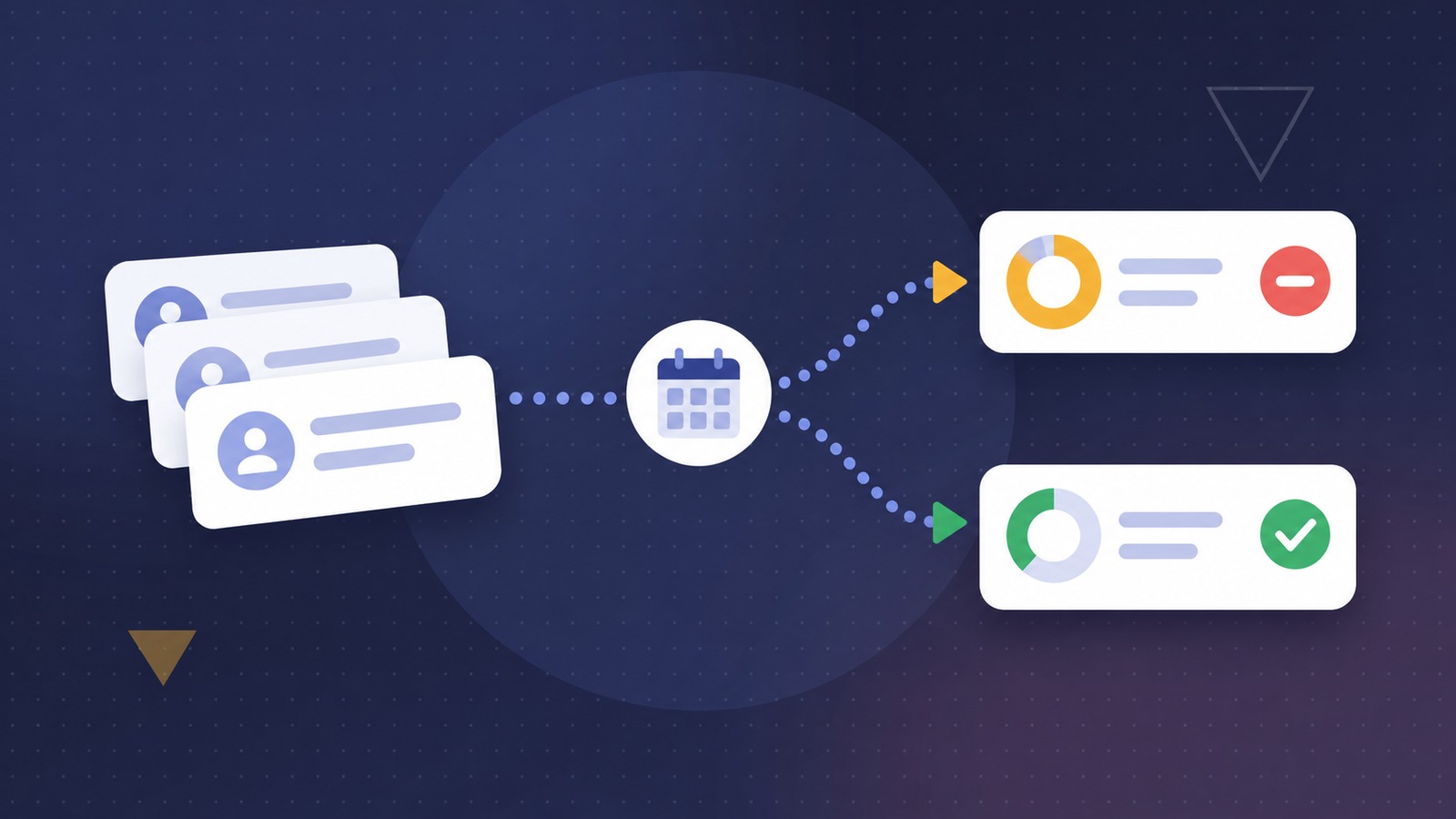
Fusion’s daily limits on forwarding rules give that decision a place in the lead workflow. They are a way to guide onward delivery using a recorded daily count, not a promise that every buyer’s capacity can be managed automatically.
Put the boundary on the route
Fusion supports forwarding rules for submissions recorded as accepted or rejected by the source connector. Each rule points to another connector and can carry a positive daily limit. Enabled rules are evaluated in their configured order.
Before forwarding along a limited route, the implementation checks the matching recorded count. If that count has reached the limit, it skips that rule and continues to the next applicable rule. For ordinary forwarding rules, processing stops after sending along a selected route; it does not automatically send the lead to every destination in the list.
That makes the order meaningful. A preferred route can sit ahead of an appropriate alternative, with the limit helping determine when the next rule is considered. The alternative must already be configured: Fusion does not invent a destination or decide which business should receive the enquiry.
Make the next step a team decision
Consider an illustrative agency workflow. A destination team agrees to receive a bounded amount of onward lead traffic from a particular source. The account manager confirms that arrangement with operations, which configures the relevant forwarding rule and an authorised alternative.
When the recorded count reaches the first route’s limit, that route is skipped for the lead being processed. The next applicable rule can then be considered. The account manager has a defined policy to discuss with colleagues rather than a standing request to keep an eye on the volume.
The human benefit is less dependence on continuous manual watching and clearer responsibility for the next handoff. It is not evidence of a measured improvement in conversion, nor does the setting establish that a sales team will respond promptly. Those outcomes still need their own review.
An alternative destination must also be suitable for the enquiry and permitted by the business’s data-handling arrangements. Capacity alone is not a reason to send someone’s details somewhere new.
Know what the daily count actually means
The reviewed implementation scopes the count to the organisation, the source connector and the recorded destination connector. It is not a single buyer-wide allowance shared automatically across every source. If several source connectors feed the same destination, the team should not assume that one rule’s limit covers their combined traffic.
The count uses source lead records marked with a successful forwarding status and created within the calculated day window. That status records the forwarding operation; it should not be interpreted as proof that the destination accepted the lead or that a sale followed.
The day boundary follows the application server’s local-day calculation. It should not be assumed to match a particular buyer’s working day or time zone without confirmation. These details matter whenever the operational agreement uses a different definition of volume or day.
A useful control, not a guaranteed hard quota
A count checked before sending is different from an atomic reservation of the last available slot. Concurrent submissions can make that distinction important. Teams with a strict contractual ceiling should validate the behaviour under their workload rather than treat this setting as a guarantee that the ceiling cannot be exceeded.
Nor is skipping a limited rule a promise to hold the enquiry and deliver it tomorrow. The forwarding process continues through the applicable configured rules. If none can be used, the setting itself does not establish a next-day queue. The team needs an explicit process for anything that remains unresolved.
Before relying on a route, agree four things: which source it covers, what recorded outcome is counted, which day boundary applies and what the authorised next step is. Then test those assumptions with appropriate test data and inspect the actual results.
Remove the watching, keep the judgement
The value of a daily forwarding limit is not simply that it contains a number. It turns an operational agreement into a rule the workflow can consult, while giving colleagues a clearer basis for deciding what happens next.
Fusion supplies a bounded routing control. The people responsible for the relationship still choose the destinations, validate the limits and own the exception process. Used with those responsibilities intact, the feature can make a busy day less dependent on someone remembering to interrupt the flow at the right moment.

About the author
David Farrell
David is the CTO of Leadify (Pty) Ltd