
General AI Assistants or Marketing Agents? Compare the Decision, Not the Demo.
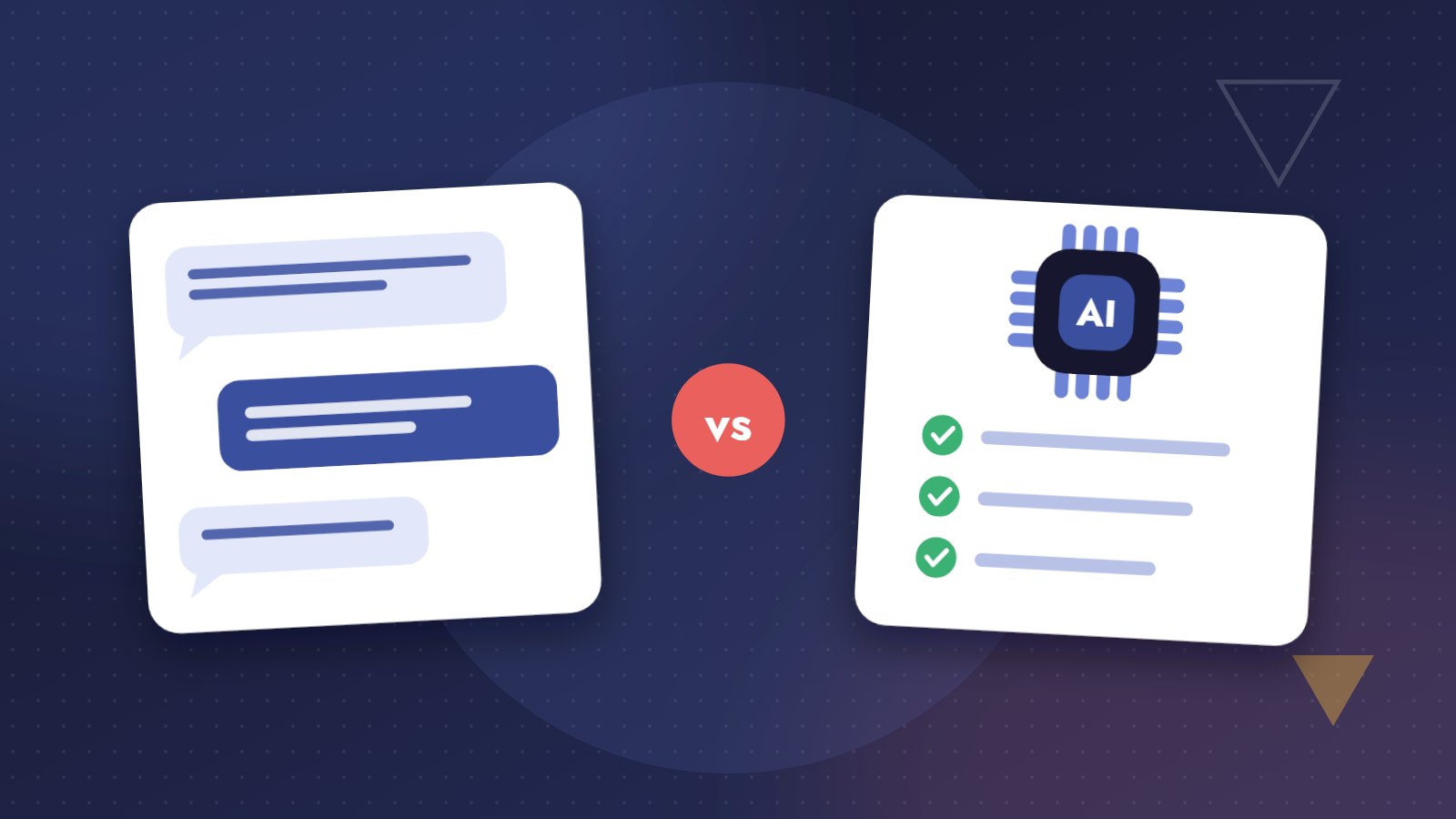
A marketing team can now ask several very different kinds of AI agent to help with the next campaign. One promises to work across the team's apps. Another starts with the business's storefront and social accounts. A third specialises in choosing which message a customer receives and when.
Put them in a demo and they may all look like a conversation. Treat them as interchangeable purchases and the comparison becomes much less useful. My view is that the better question is which decision the team wants to hand over, and which system should remain responsible for it.
The same interface can hide different jobs
OpenAI introduced dots on 29 September 2026 as always-on agents with their own cloud computers and connected apps. Its examples include revising launch materials when product scope changes and preparing content for review. The rollout began for eligible Pro and Business Premium users, with an administrator-enabled Enterprise beta. Specialist organisational dots are a preview with focused enterprise pilots, not a generally available marketing department in a box.
On the same date, Meta announced new business skills and connectors for Muse, including Shopify, Klaviyo and Meta business accounts. Its examples include analysing business performance and drafting a campaign. Meta says publishing, sending and spending require approval. Its announcement describes Muse as available in the US and Canada; teams elsewhere should not assume they can adopt it immediately.
Braze's 29 September announcement, updated on 2 October, describes a narrower decisioning job. Decisioning Studio Go is designed to select email creative variants and sending times within marketer-set limits. It is in beta, with general availability expected on 14 October 2026. Braze also announced Operator Connect, in beta, to bring workspace-aware actions into external AI tools under the user's existing Braze permissions.
Those are vendor-described capabilities, not results from a comparative trial. They also illustrate why a single ranking of the best marketing agent would be misleading. Keeping a changing launch brief coherent is a different job from deciding a customer's next message.
Start with the decision you want to improve
I would separate the buying conversation into two questions. Do we need help preparing and coordinating work? Or do we need a system to make repeated decisions inside an established customer journey?
For the first job, the relevant test is whether the agent can turn scattered context into something the team can use. Give it an approved offer, an audience description and last month's results. Ask for a campaign proposal. Then change one fact in the brief and inspect which recommendations and assets it revises. Count the corrections a reviewer must make, including unsupported promises and assumptions about the audience.
For the second job, a polished proposal tells you very little. The test should focus on the decision policy: what choices are allowed, what outcome it is trying to improve, and whether the team can distinguish a real improvement from normal variation. Where practical, keep a comparable group on the existing approach rather than declare success because the agent's dashboard looks busy.
These are proposed evaluation methods, not claims that any named product will pass them. A general assistant could be useful for campaign planning without being the right tool for continuous message selection. A specialist could improve a particular journey while adding little to the creative brief.
A general assistant and a specialist may work together
The choice is not necessarily one or the other. Operator Connect's announcement is a useful signal: the conversation can happen in an external assistant while the campaign action remains governed by the marketing platform. A familiar chat window does not have to become the new home of every customer decision.
My preference would be to keep one authoritative version of the campaign's offer, audience exclusions and approved creative. Let a planning assistant prepare a proposal against that version. Let the execution system enforce the choices that have actually been accepted. If both layers can change the same campaign, the team should be able to explain which one owns the final state.
That matters when an email programme sits beside SMS. A suggestion to increase email frequency should not silently change the team's SMS contact policy. Nor should an assistant infer permission to contact someone merely because a customer record is visible. In a trial, I would deliberately include a suppressed contact and a channel-specific exclusion, then check whether each layer respects the intended boundary.
Compare the work left behind
Broad access and specialist knowledge each bring a different kind of maintenance. A planning assistant needs current briefs and usable connections. A decisioning system needs appropriate objectives, trustworthy outcomes and maintained limits. Neither should be assessed only by how quickly it produces its first impressive answer.
CMSWire's 2 October reporting on Braze's Forge announcements makes a relevant point: self-service features leave marketers responsible for frequency ceilings, permission scopes and keeping rules current. That is a reason to include ownership in the comparison, rather than assume automation removes it.
For a practical evaluation, I would ask each supplier to work through the same small campaign scenario and document what the team still has to do:
- Preparation: Which source material must a person clean up or explain before the agent can begin?
- Decision: Does it recommend an action, build something for review, or choose among approved options as the journey runs?
- Evidence: Can the reviewer see the inputs and outcome behind the recommendation, rather than just a confident explanation?
- Change: What happens when the offer, available stock or audience exclusion changes?
- Handover: Can another marketer inspect and continue the work without relying on the original operator's private conversation?
I would record reviewer time and unresolved exceptions alongside any campaign result. A tool that saves drafting time but creates repeated reconciliation work may still be worthwhile, but that trade-off should be visible.
Buy for a defined responsibility
These launches make the category more interesting, but they do not establish a universal winner. Availability differs, some products remain in beta, and the announcements are not an independent comparison of effectiveness.
The useful starting point is a sentence the team can agree on: this agent is responsible for preparing this work, or making this bounded decision, while this person owns the outcome. Compare products against that responsibility. The demo can show how the conversation feels. The trial must show what the team is actually getting back.

About the author
David Farrell
David is the CTO of Leadify (Pty) Ltd